+32 487 55 73 27

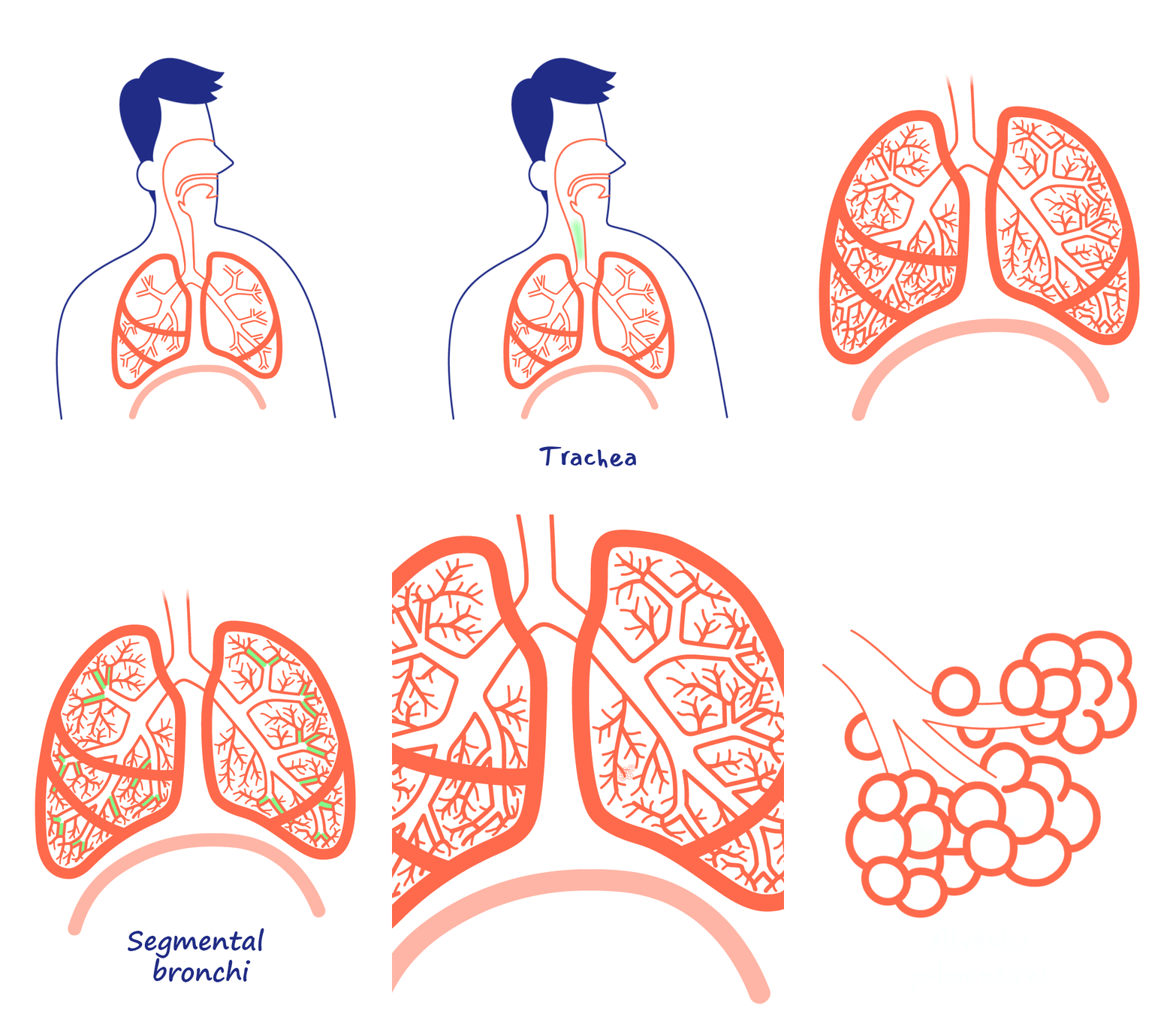
Chronic respiratory failure is the long-term inability of the lungs to properly oxygenate the blood.
It can be caused by:
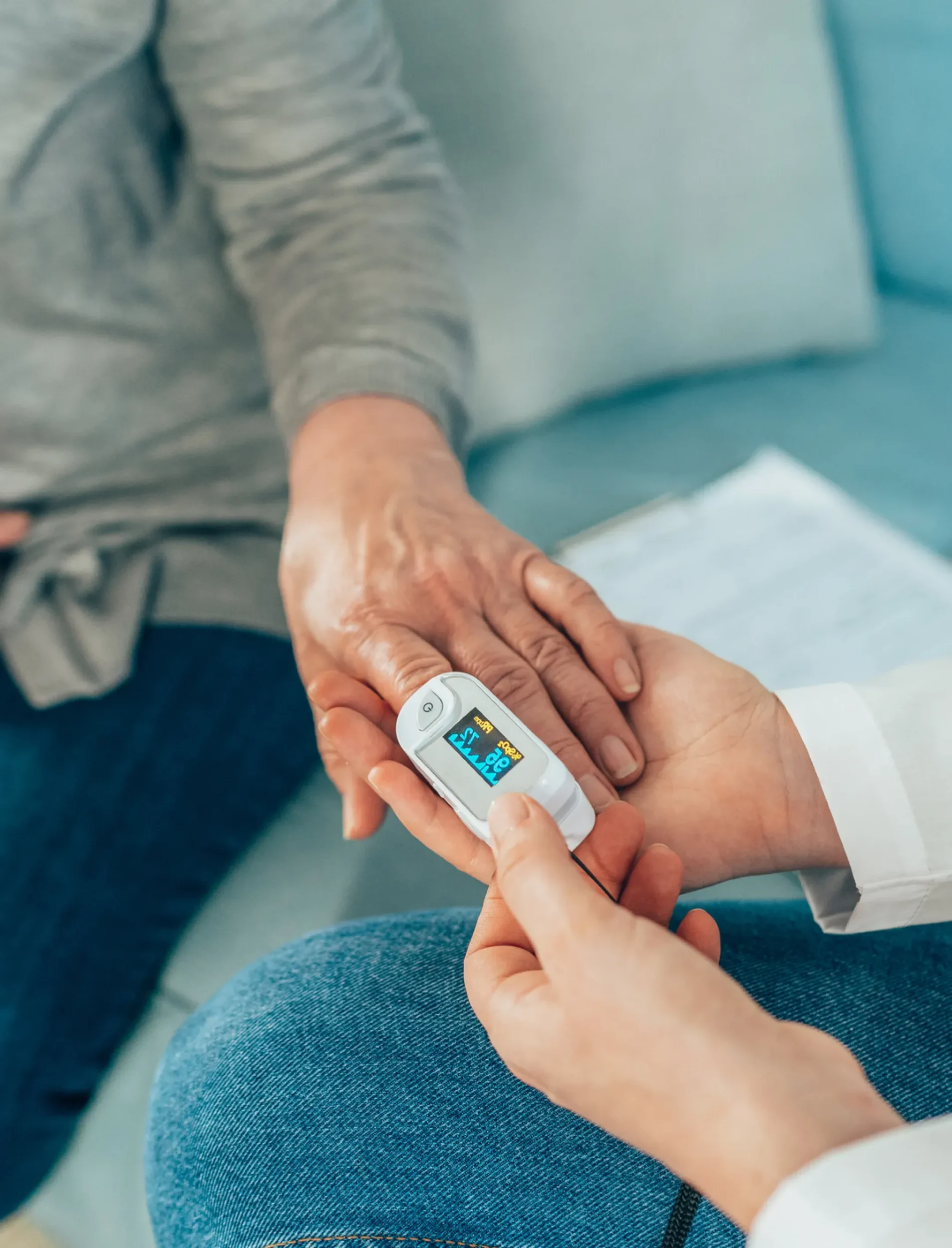
Respiratory failure is diagnosed by a doctor. A blood gas test (arterial blood gases) is performed to measure oxygen and carbon dioxide levels in the blood. This test can confirm the presence of hypoxemia, meaning there is too little oxygen in the blood.
A blood gas test involves taking a blood sample from an artery, usually in the wrist (forearm area). The sample is then analyzed to measure:
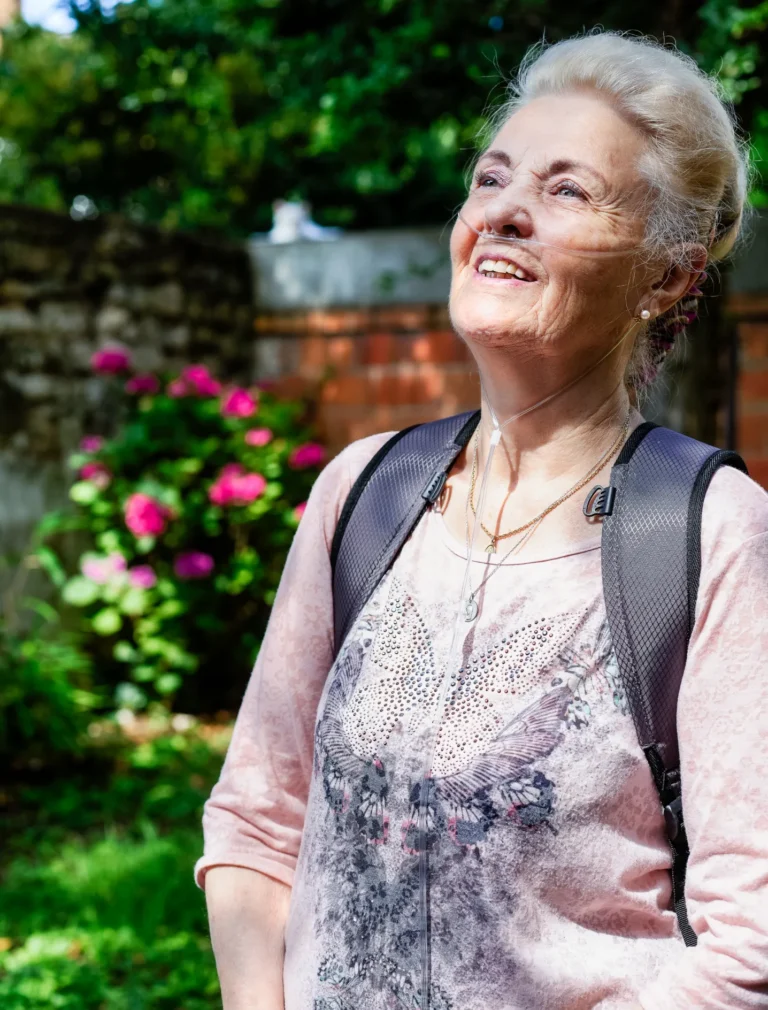
Oxygen therapy involves supplying oxygen to a patient using nasal oxygen cannulas (oxygen “glasses”). Oxygen can be stored in liquid or gas form. It can also be delivered through an electric concentrator, which extracts and concentrates oxygen from the air before supplying it to the patient.
This device helps improve air exchange in the lungs. It consists of a machine connected to the patient via a tube and a fitted mask. It delivers air when the person begins to inhale, providing enough support to help them breathe more easily.
Elia Médical supports patients treated for respiratory failure through oxygen therapy and/or non-invasive ventilation. These treatments allow patients to remain at home despite their condition.
Our technicians ensure that the equipment is working properly, replace interfaces and consumables, and make sure patients fully understand how to use the devices.
By continuing to browse this site, you agree to the use of cookies to compile visitor statistics and offer you a personalized experience.