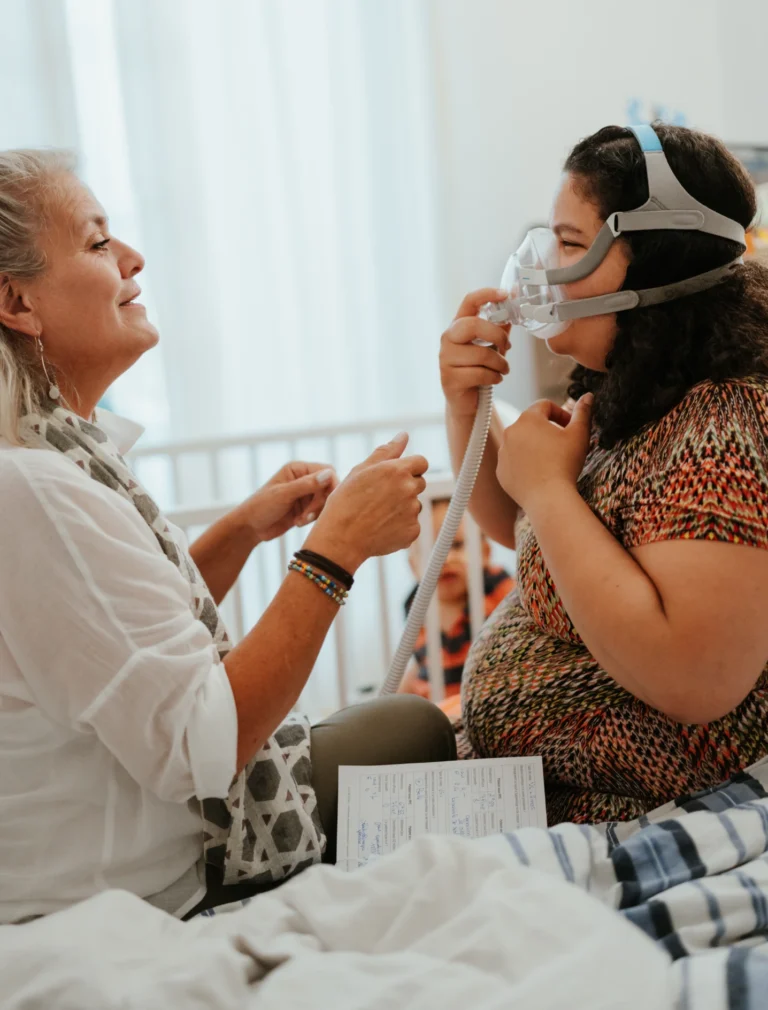
Sleep apnea
Sleep apnea is defined as a complete pause in breathing lasting at least 10 seconds during sleep.
Hypopnea, on the other hand, is a partial reduction in breathing that leads to a drop in blood oxygen levels and a brief micro-awakening.
Both of these breathing events always end with a micro-awakening that allows breathing to resume.
This micro-awakening is accompanied by an increase in heart rate and blood pressure.
Symptoms and risks of sleep apnea
Most common symptoms
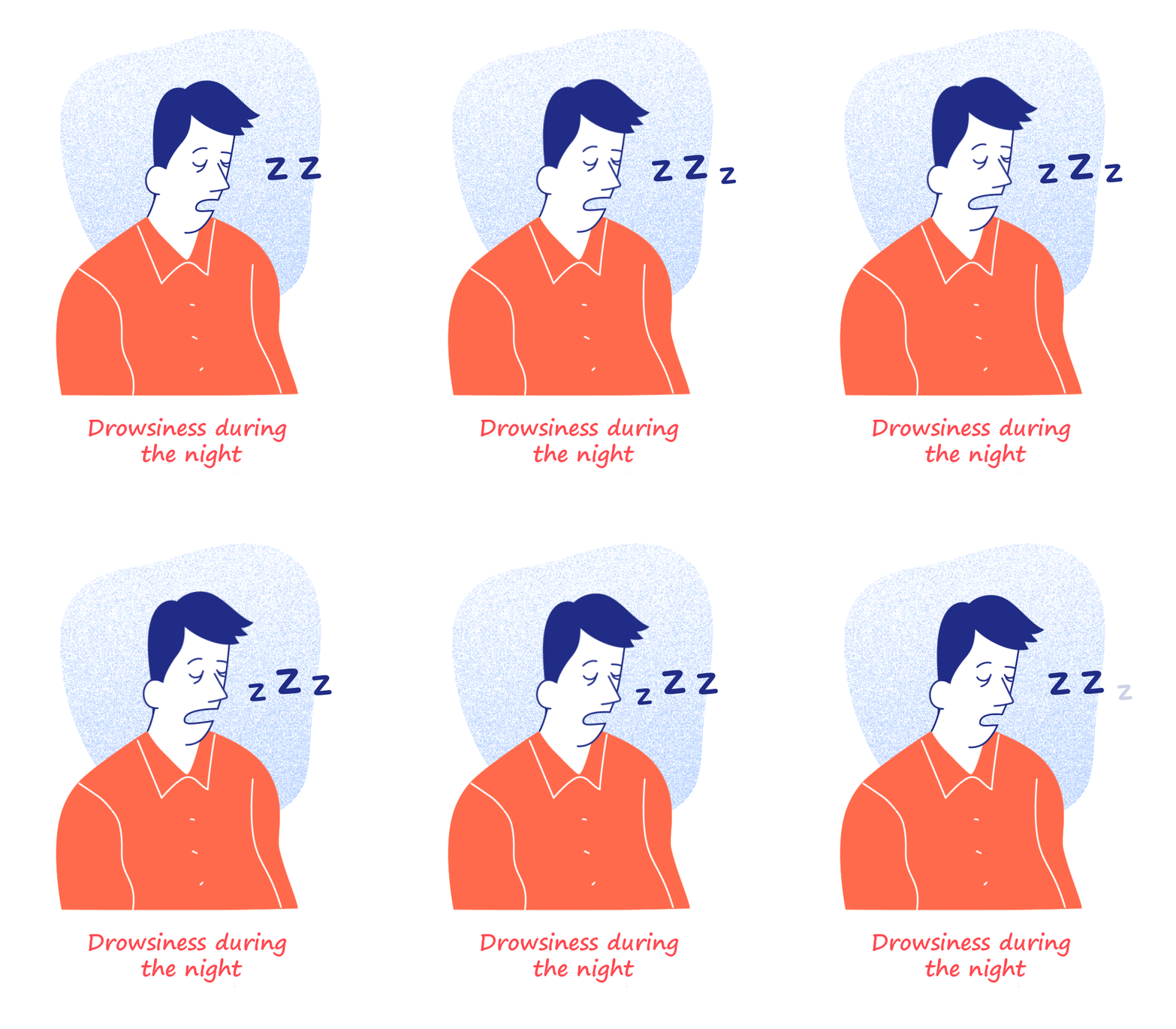
Sleep apnea syndrome is defined by excessive daytime fatigue combined with at least two of the following symptoms:
- Severe, daily snoring
- A feeling of choking during sleep
- Non-restorative sleep
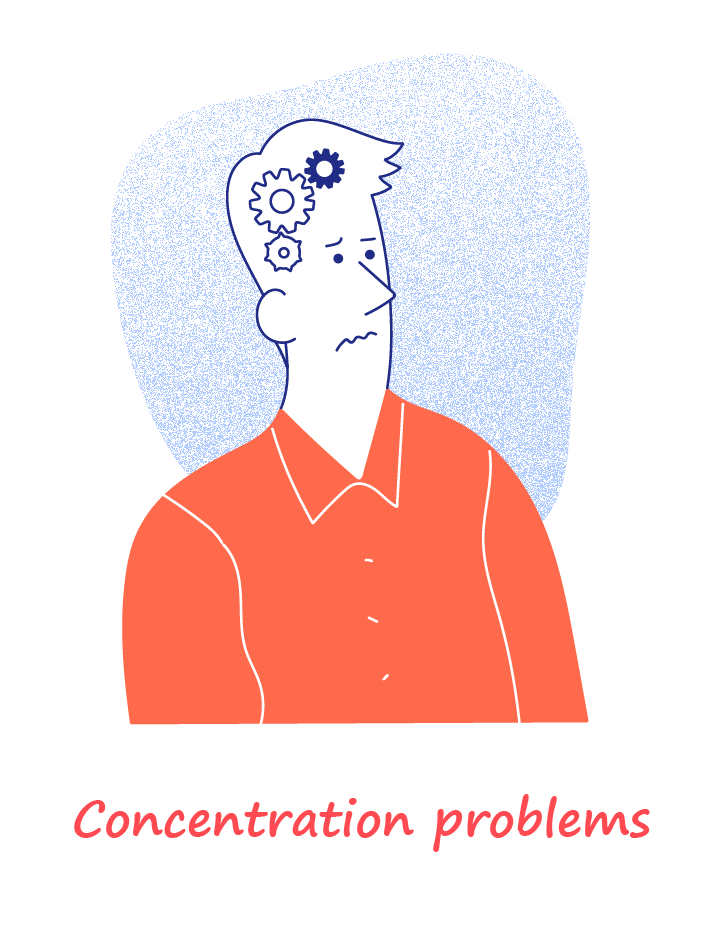
- Difficulty concentrating
- Waking up more than once at night to urinate
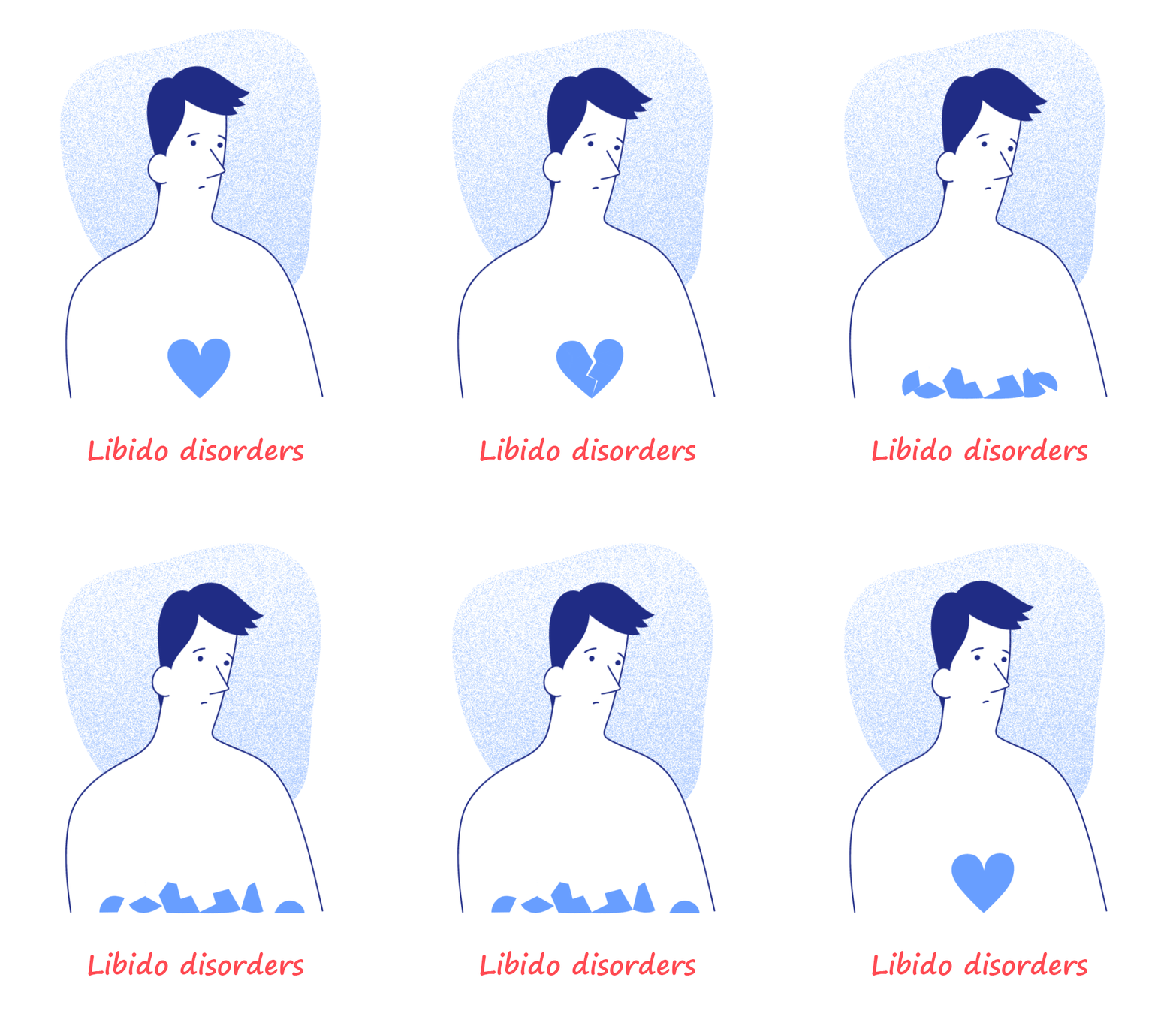
- Reduced libido or erectile dysfunction
Risks for untreated patients
Risks linked to poor sleep quality:
- Road accidents caused by drowsy driving
- Workplace accidents due to fatigue
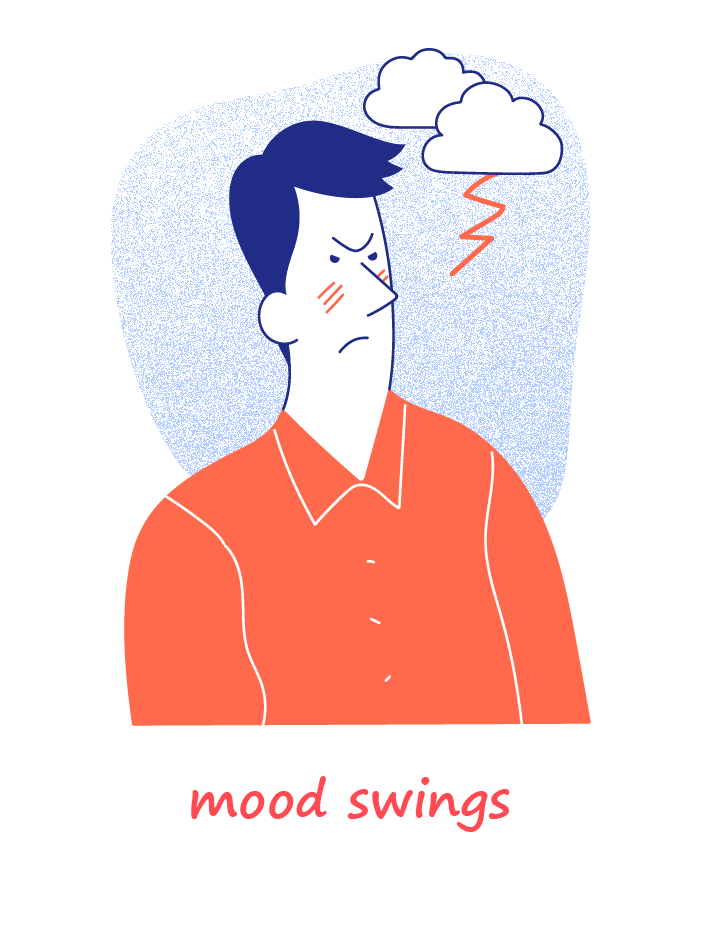
Memory problems - Irritability, mood disorders, and difficulty concentrating
Long-term risks:
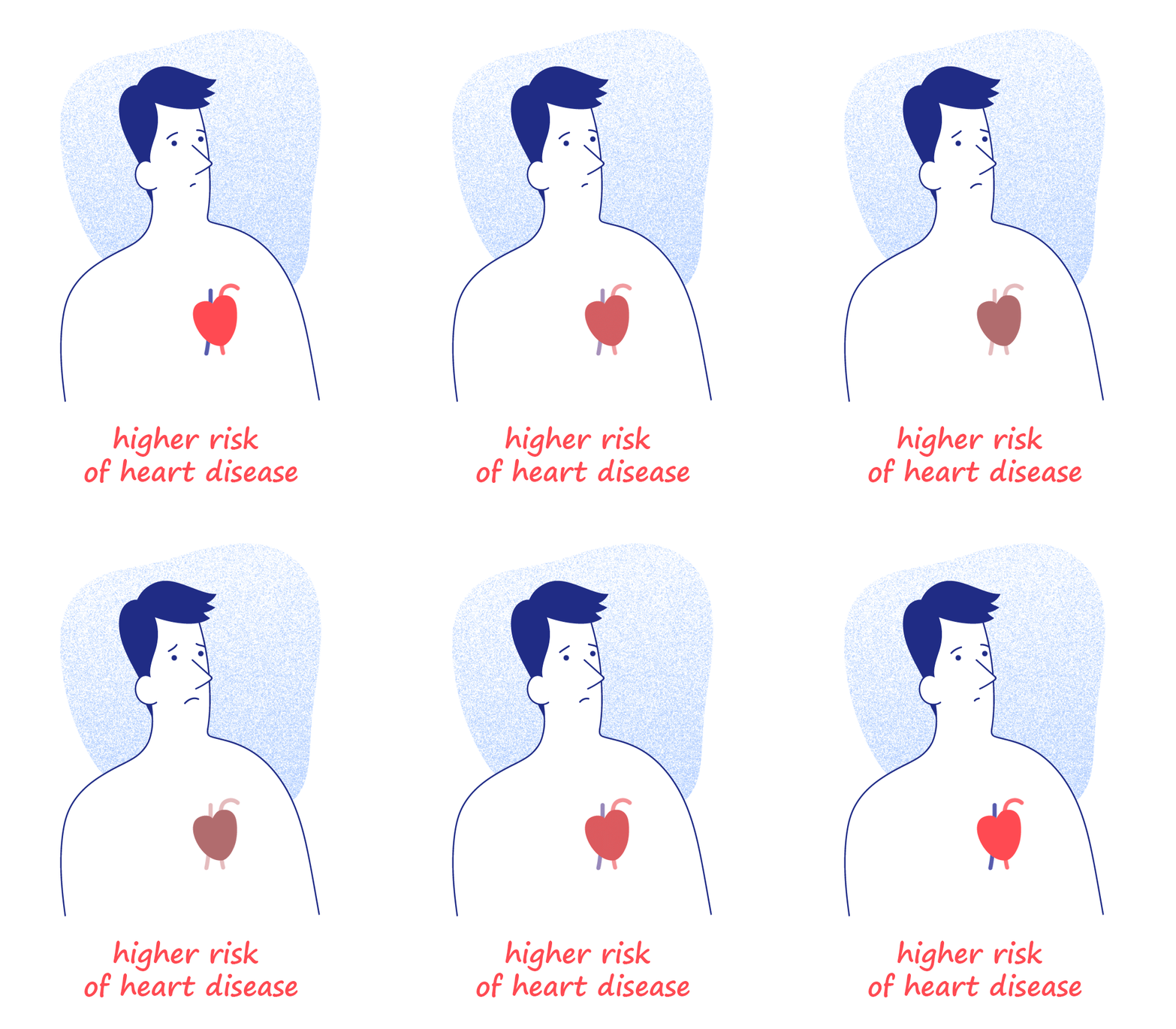
- Cardiovascular events
- High blood pressure
- Type 2 diabetes
Diagnosing sleep apnea
To diagnose sleep apnea syndrome, it is necessary to consult a doctor. The diagnosis is based on suggestive clinical signs and a high apnea–hypopnea index (AHI). A sleep study is then performed to determine the number of apnea or hypopnea events per hour, using the apnea–hypopnea index.
Additional tests are often requested, including an ENT examination to check for any anatomical causes of breathing obstruction (nose, palate, tonsils), as well as lung function testing (pulmonary function tests) and blood gas analysis.
1 – Polysomnography
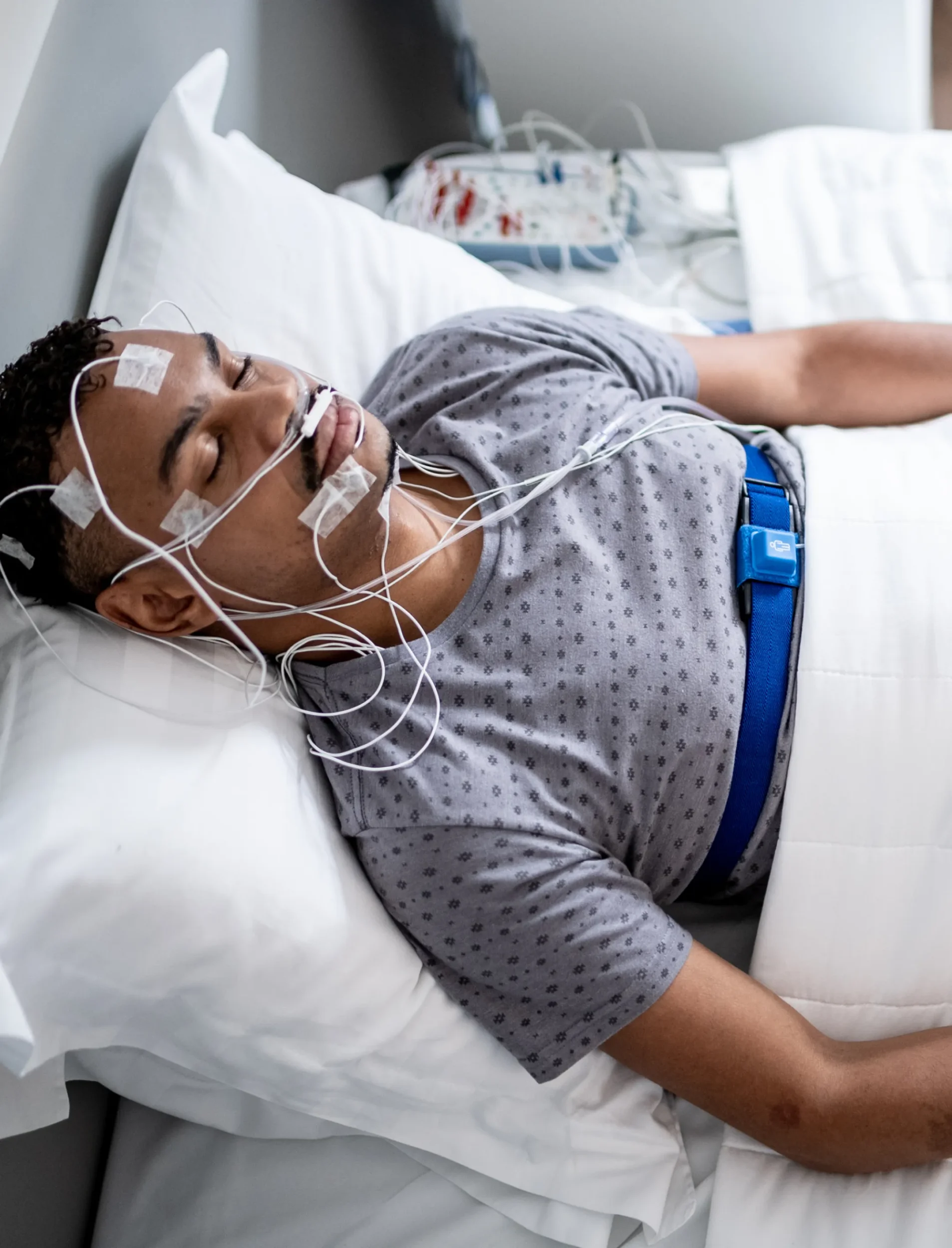
This is the reference test for detecting sleep apnea. It is painless and carried out overnight, either in a sleep laboratory or at home. Around fifteen sensors are placed on the patient to monitor sleep and determine whether sleep disorders are present, and if so, their frequency.
2 – Polygraphy
This is the second most commonly used diagnostic method. It uses similar sensors but does not include an electroencephalogram (EEG). This test is less precise and does not allow detection of other sleep disorders, such as narcolepsy.
Treatment
Continuous Positive Airway Pressure (CPAP)
There are several treatment options for sleep apnea syndrome. At Elia Médical, we support patients treated with continuous positive airway pressure (CPAP). This is the gold standard treatment for sleep apnea.
It significantly reduces apnea episodes and greatly improves quality of life.
Installing your CPAP device
An Elia Médical technician will install your CPAP device at home and support you throughout your treatment.
They will explain how the equipment works and how to maintain it, help you choose the most suitable mask, and answer any questions you may have.